|
26/2/2023 0 Comments bit-Generations: Boundish There is a lot to love about the bit Generations series of GBA games, from their clean, minimalist aesthetic trappings, to their frequent experimentation and fresh take on established retro genre conventions. I had it in my head that they were developed by Nintendo R&D 1 but nope - it’s Skip Ltd. at the helm. Love-de-Lic have a lot to answer for. 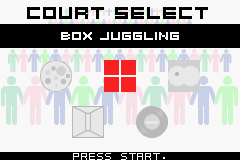 Boundish is a compilation of several ball-and-paddle games, all of which present a novel spin on the likes of pong. However, I’m mostly interested in ‘BOX JUGGLING’ which has long been a favorite of mine - I load it up on my Anbernic RG280v on my commute after I complete my daily (and minimal effort) Duolingo exercise, and I lose myself in the age-old sport of playing catch whilst writing kanji in my head. 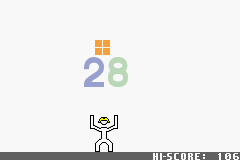 私 - A two branched tree and a squished ム: this one's easy. The game is simple. Scuttle around the bottom of the screen, arms akimbo, and position yourself to bounce the box (beautifully wrapped gift?!) as it falls - the game ends and your score tallied as soon as an orange box hits the ground. °˖✧◝(⁰▿⁰)◜✧˖° Caveats and curiosities:
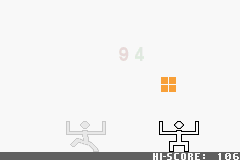 国 - Country is easy enough to remember, like ロ with a crude approximation of my home country inside - the little accented dash where the capital would be. The game becomes one of plate spinning in which you must utilise every tool at your disposal to keep the game going. As mentioned, the best bit is that punting boxes will fling them off-screen - forcing you to anticipate the trajectory of it - visualize the movements it makes when it’s out of view - ready yourself for its swift plummet. I assure you: the physics are sound, and there’s no tomfoolery going on beyond the veil, you really can accurately ascertain the exact trail of that box. It can spend upwards of 10-20 seconds up there - out of view - if you hit it hard enough. You learn when to use your arms to keep boxes on screen, and when to punt them so as to give yourself some much needed breathing room. The pace of the game is entirely set by you, your decisions, your ability to plot out simple physics paths in your head, and ultimately for me - the length of my commute. 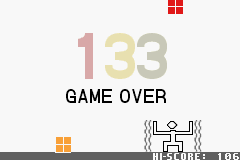 病 - first you draw the kettle-topped outer wall, with two people outside - one faced away, and the other with their nose pressed up against the glass. Inside you place a fluorescent light above a box-shaped bed. Then you put a person in the bed - their head touching the light.
0 Comments
|
AuthorI write about games and music here! ArchivesCategories |
 RSS Feed